
Building Organisational Resilience: A Framework for Navigating Disruption
Organisational resilience is a capability leaders build throughout their teams, enabling people at every level to share an understanding of the critical realities the organisation faces and how to respond in ways that capitalise on disruption. The Capelle Resilience Framework provides a process for building that shared understanding in line with the organisation’s long-term goals, values, mission and purpose.
Disruption no longer arrives in cycles. For most organisations today, disruption has become the new normal, forming the backdrop to how leaders and teams operate. Technology cycles keep compressing. Workforce expectations keep shifting. AI keeps reshaping roles, skills and productivity. Through these changes, leaders have to bring their teams with them, sustaining alignment, pace and direction as conditions shift.
To better consider the value of the Resilience Framework, think of a challenge your organisation faces that keeps you up at night. You need your people to respond differently. The pressure is real, the stakes are high, and the path forward is unclear.
How aligned is your team to that reality? Do they share the same clarity you have about how to respond?
For many leaders, the honest answer is: not as aligned as the situation requires. Resilience work begins in the gap between what leaders recognise and what teams rally around.
Organisations that build this capability throughout their teams gain something competitors cannot easily replicate: the ability to move together, at pace, when it matters most.
What Organisational Resilience Means for Leaders
Organisational resilience allows an organisation to capitalise on disruptive changes to achieve long-term business goals in line with its values, mission and purpose. It is a capability developed through continuous scanning, sensemaking, and action. It requires both risk-taking for innovation and recovery for sustainability.
Based on research, this capability has three distinct dimensions.
In practice, these dimensions come into play in a dynamic way. Research shows that resilience does not develop only in response to crisis; it grows through continuous, everyday practice (Duchek, 2020). Because these dimensions can reinforce one another, leaders should develop them as a blended mix and not as independent factors.
This practice of growing organisational resilience depends on two conditions, in Capelle’s view: (a) visionary and courageous leadership, and (b) a culture of high psychological safety. Visionary and courageous leadership powers this process and gives it visibility. High psychological safety supports the honest conversations and difficult decisions the process requires. Ultimately, the dimensions of resilience are in service of what matters most: the organisation’s values, mission and purpose.
Capelle Consulting developed the Capelle Resilience Framework for this purpose: to give leaders and teams a shared language and repeatable process for building resilience together, at every level of the organisation.
The Capelle Resilience Framework

How the Framework Works: The Risk Zone and Recovery Zone
The Capelle Resilience Framework presents resilience as one continuous cycle with two interconnected zones.
In the Risk Zone, teams adopt a futuristic orientation. In this part of the cycle, teams scan the environment, sense what is changing, and act in response. Through reflection and learning, they innovate. Practised consistently, this grows organisational capability for change. When teams name their critical realities honestly, they respond from a stronger position because they engage what actually happens, not only what feels comfortable to say.
The Recovery Zone carries a past-and-present orientation. In this part of the cycle, teams reflect on what they have experienced in the Risk Zone. They integrate what they have learned and diffuse the learning to other teams. This work grows organisational knowledge for change and ensures that the work of developing organisational resilience is sustainable.
The cycle does not require teams to start from the same point every time. Context shapes where leaders enter the cycle. At the start of a crisis, a team may need to act first to stabilise the situation before it moves into sensemaking. As the situation evolves, the work may move into recovery, where the team reflects, learns and integrates what it has experienced. The framework gives leaders a responsive way to move through the cycle while staying guided by the organisation’s Vision, Mission and Values.
The semiconductor industry is moving through an AI-driven supercycle. Production demands keep intensifying, technology cycles keep compressing, and leaders face constant pressure to adapt while maintaining execution. Capelle worked with Gianpaolo Mettifogo and his team at Micron Technology’s Singapore Assembly and Test Operations to apply the Capelle Resilience Framework to these realities. What follows captures the opportunities the process surfaced, and what the team strengthened through the work.
A Leader's Experience Applying the Framework

Gianpaolo Mettifogo leads Singapore Assembly and Test Operations at Micron Technology, placing him close to the leadership challenges shaping the semiconductor industry today. His team navigates AI-driven demand, growing production complexity and the constant challenge of adapting while maintaining execution. Capelle worked alongside Gianpaolo and his team to apply the resilience framework to this operating context.
The Adaptability Quotient in Practice
Capelle worked with Gianpaolo and his team through the Resilience Framework. In that context, Gianpaolo shared the leadership philosophy that guides his approach. His Leadership Quotient formula, IQ × EQ × AQ = LQ, describes what effective leadership demands in the semiconductor industry.
Gianpaolo explains: “In the semiconductor industry, leadership is shaped by three forces that are accelerating at the same time: advanced technology, growing complexity, and the need for greater agility. That reality underpins our Leadership Quotient (LQ) formula, where leadership effectiveness comes from the combined strength of one’s Intelligence Quotient (IQ), Adaptability Quotient (AQ), and Emotional Quotient (EQ).”
Gianpaolo frames adaptability as an opportunity for growth in this environment: “Rapid technology cycles, evolving customer needs, and the integration of digital and AI-enabled tools require leaders and teams to adjust quickly while staying focused on execution and outcomes.”
Gianpaolo describes what AQ asks of leaders in practical terms: “I see AQ demonstrated when leaders remain open to new ideas and ways of working, continuously learn, unlearn and relearn, and maintain composure amid change. Practically, this means leaders who can move from reactive to proactive leadership, particularly when facing constraints or emerging challenges, take ownership beyond functional boundaries, and foster psychological safety, where people feel confident to speak up, challenge assumptions, and learn from experience. AQ is less about having all the answers and more about leading with clarity, adaptability, and trust as the path forward continues to evolve.”
What the Engagement Set Out to Do
Gianpaolo describes what he set out to strengthen: “The behaviour I most wanted to strengthen was intentional adaptive leadership, which would empower leaders to guide their teams through new territory with confidence and clarity.”
He adds: “The ability for leaders to pause, reflect, and respond thoughtfully rather than reactively, especially under pressure. In many organisations, speed and urgency are rewarded, but over time this can reinforce default behaviours that are less effective in complex environments.”
How the Capelle Resilience Framework Gave the Team a Shared Language
One practical challenge in building organisational resilience lies in defining adaptability clearly. Leaders can call for greater agility, but teams need concrete behaviours they can recognise and practise.
Gianpaolo describes what the Capelle Resilience Framework gave his team: “Instead of viewing adaptability as an instinctive trait, the model breaks it down into behaviours that can be developed deliberately: simplifying complexity, communicating transparently and approaching change in manageable steps.”
He continues: “The model helps teams shift their mindset from viewing any change as a disruption to seeing it as a natural rhythm for our industry and an opportunity for continuous improvement.”
He adds: “What I value about the AQ model is that it offers a simple, shared framework for navigating disruption. The Scan–Sense–Act–Recover cycle encourages leaders to avoid jumping straight into action without first understanding what is truly changing and why.”
What Changed: Tangible Shifts in Leadership Behaviour
Gianpaolo describes the shifts he has seen in his team: “I’ve definitely seen tangible shifts, leaders are showing a stronger growth mindset, particularly in how proactively they surface ideas, test new approaches, and engage with digital and AI-enabled tools in their day-to-day work. There is also noticeable change in how teams collaborate. Leaders are involving cross-functional partners earlier and seeking diverse perspectives on issues. This has improved both decision quality and speed of execution. There is greater openness in discussing priorities, trade-offs, and what genuinely adds value.”
He adds: “While each change may seem incremental on its own, taken together they reflect a more adaptive, proactive leadership culture that is equipped to navigate change.”
On recent changes, Gianpaolo says: “The workshop fostered a safe environment for my team to share concerns about recent changes. I learned resistance stemmed from unclear communication about how and why the changes were happening. Addressing this improved understanding and reduced pushback, reminding me to clearly explain the reasons behind organisational changes.”
Organisational Resilience as a Competitive Advantage
The leadership realities Gianpaolo describes at Micron Technology’s Singapore Assembly and Test Operations extend beyond the semiconductor industry. Organisations navigating disruptive change, whether through AI adoption, workforce shifts or market disruption, often face a similar question: can leaders and teams navigate change strategically rather than reactively?
Resilience work helps leaders develop teams that stay clear-eyed, aligned and agile when the environment shifts. The Capelle Resilience Framework supports this work by giving leaders and teams a shared way to move through the full cycle: scanning, sensing and acting in the Risk Zone, then recovering and integrating learning in the Recovery Zone. When leaders and teams work through the cycle together, they build shared understanding under pressure, alignment when it matters most, and the ability to capitalise on disruption.
While the actual practice may look different depending on the organisational context, the underlying discipline remains similar: teams that make time to scan, sense, act, recover and integrate do more than move through disruption. They grow stronger through it and become more capable of navigating the next disruption.
The Conversation Continues
This article is a starting point. The Capelle Conference 2026 carries the conversation further, bringing together leaders from across sectors in Batam this July for two days of shared experience, honest dialogue, and deeper exploration of what it takes to build resilient teams in an age of rapid change.
Across two days, featured voices from across workforce transformation, enterprise leadership, AI, and people development explore what resilience means in practice. Each brings a distinct lens, grounded in real experience of leading through disruption. The programme is designed not to deliver theory, but to generate the kind of honest, practical dialogue that leaders can take back into their teams.


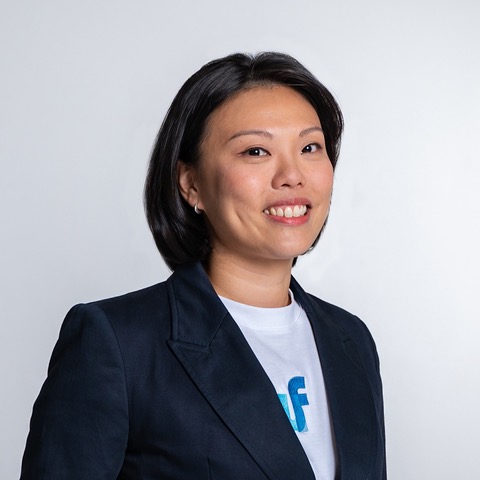
For questions on Capelle Conference 2026 or your organisation’s participation, speak with your Client Advocate or contact us directly.
Contact Us About Capelle Conference 2026Ready to build organisational resilience?
If the leadership challenges in this article feel familiar, we would welcome the conversation. Capelle works with organisations across sectors to build resilience as a structured leadership capability, through diagnostics, development programmes, and sustained engagement.
Reach out to your Capelle Client Advocate or contact us directly to explore what that could look like for your organisation.
Join us in Batam this July. Leaders from across industries gather to explore what it takes to build resilient organisations in an age of AI, rapid digitalisation, and a world where the meaning of work is ever shifting. Speak to your Client Advocate or contact us to find out more.